
Free eBook, AI Voice, AudioBook: The Picture of Dorian Gray by Oscar Wilde
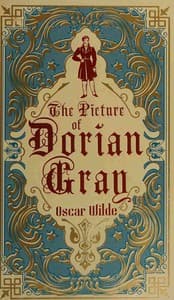
AudioBook: The Picture of Dorian Gray by Oscar Wilde
0:00 / Unknown
Loading QR code...
You can listen full content of The Picture of Dorian Gray by Oscar Wilde in our app AI Voice AudioBook on iOS and Android. You can clone any voice, and make your own AudioBooks from eBooks or Websites. Download now from the Mobile App Store.


Listen to the AudioBook: The Picture of Dorian Gray by Oscar Wilde
The Picture of Dorian Gray
by Oscar Wilde
CHAPTER I.
The studio was filled with the rich odour of roses, and when the light summer wind stirred amidst the trees of the garden, there came through the open door the heavy scent of the lilac, or the more delicate perfume of the pink-flowering thorn.
From the corner of the divan of Persian saddle-bags on which he was lying, smoking, as was his custom, innumerable cigarettes, Lord Henry Wotton could just catch the gleam of the honey-sweet and honey-coloured blossoms of a laburnum, whose tremulous branches seemed hardly able to bear the burden of a beauty so flamelike as theirs; and now and then the fantastic shadows of birds in flight flitted across the long tussore-silk curtains that were stretched in front of the huge window, producing a kind of momentary Japanese effect, and making him think of those pallid, jade-faced painters of Tokyo who, through the medium of an art that is necessarily immobile, seek to convey the sense of swiftness and motion. The sullen murmur of the bees shouldering their way through the long unmown grass, or circling with monotonous insistence round the dusty gilt horns of the straggling woodbine, seemed to make the stillness more oppressive. The dim roar of London was like the bourdon note of a distant organ.
In the centre of the room, clamped to an upright easel, stood the full-length portrait of a young man of extraordinary personal beauty, and in front of it, some little distance away, was sitting the artist himself, Basil Hallward, whose sudden disappearance some years ago caused, at the time, such public excitement and gave rise to so many strange conjectures.
As the painter looked at the gracious and comely form he had so skilfully mirrored in his art, a smile of pleasure passed across his face, and seemed about to linger there. But he suddenly started up, and closing his eyes, placed his fingers upon the lids, as though he sought to imprison within his brain some curious dream from which he feared he might awake.
“It is your best work, Basil, the best thing you have ever done,” said Lord Henry that afternoon, as he slowly rose from his seat and, stretching himself out upon the divan, picked up with languid curiosity a richly jewelled paper-knife which was lying to his hand, and passed his fingers over its jewelled handle.
“Yes, it is,” murmured Basil Hallward. “I know that I shall never do anything half so good again.”
“Nonsense!” said Lord Henry, with that curious languid drawl of his, for he always spoke as if the matter in hand were of the remotest possible interest to him, though to things in general he was ardently devoted. “Nonsense! You are perfectly capable of doing much better things. But you fancy that this is your best, and that is the reason why it actually is your best. That is the tragedy of you artists. You are never satisfied.”
“I am satisfied only with this,” said Basil Hallward, gazing at the picture, a look of profound adoration in his eyes. “It is the finest thing I have ever done.”
“Technically superb, of course,” Lord Henry continued, examining the cloth of the divan with a thoughtful air. “Technically superb, as all your things are. But where is the soul? Where is the thing that makes one, apart from the technique, care in the least about it? You have, of course, caught the colour of his lips, I mean the painter has, and the exquisite line of his throat, and the noble contour of his cheek. All that is lovely, Basil, quite lovely. But where is the real boy, the man behind the thing you have painted?”
“The charm of a portrait lies in the illusion of reality,” Basil said coldly.
“My dear fellow,” Lord Henry interrupted, with a sigh of theatrical weariness, “you are talking about the charm of realism, which, thank Heaven, is quite out of fashion. No one is interested in realism nowadays. Besides, you have not even caught the real boy. You have caught the mere mask, the external form. You have painted his face, and his hands, and his form. But where is the thing that makes him Dorian Gray? Where is the spirit?”
Basil Hallward got up abruptly and crossed to the fireplace. He took a palette knife which was lying there and began to clean it with slow, deliberate movements. “The spirit is what I wished to paint,” he said, his back still turned to his friend. “And I have painted it. I have put into the canvas all that I know or feel about him. It is the image of my own soul.”
Lord Henry laughed, a soft, melodious sound that was characteristic of him. “My dear Basil, you are a veritable Puritan. You are always talking about the soul. I am interested in nothing but the senses. The only way to get rid of a temptation is to yield to it. Resist it, and your soul grows sick with longing for the things it has forbidden to itself, with desire for what it has denied itself.”
“You are talking dreadful nonsense, Harry,” said Basil, turning round and facing him, his expression serious. “You are a corrupter of the youth, and I am very sorry that I allowed you to come here to-day.”
“My dear fellow, don’t be absurd,” Lord Henry yawned, stretching his arms above his head. “I am merely stating a fact. Life is a thing to be enjoyed, not a thing to be struggled with. You, with your earnest artistic temperament, are always struggling. You are trying to make art moral, and that is fatal. Art should be useless, as I was saying to you the other day.”
“Art must be moral,” Basil insisted.
“No, art is perfectly useless,” Lord Henry corrected him. “That is its special charm. Art exists purely for its own sake. The moment it tries to teach us anything or influence us in any way, it becomes didactic, and, therefore, bad art.”
“You would make the world a dull place indeed if you had your way,” Basil said, frowning.
“The world is a dull place already, Basil. It is the artists who have made it bearable. And you, my dear fellow, are one of them. Now, tell me frankly, do you not think that this portrait is your masterpiece?”
Basil hesitated for a moment. “I think it is,” he admitted at last.
“Then,” said Lord Henry, stepping forward and gazing at the portrait with an expression of frank admiration, “I must say that it is the finest thing I have ever seen. It is a triumph. The boy’s face… it is simply divine.”
You can download, read online, find more details of this full eBook The Picture of Dorian Gray by Oscar Wilde from


And convert it to the AudioBook with any voice you like in our AI Voice AudioBook app.
Loading QR code...